AAC Starter Pack: The Essential Tools to Begin Your AAC Journey (Neuro-Affirming, Simple, and Actually Doable!)
If you’re new to AAC — whether you’re a parent, teacher, or SLP beginning the journey — welcome! You’re in the right place. AAC doesn’t have to feel overwhelming or expensive. In fact, you can get started with just a few low-tech tools, intentional modeling, and a whole lot of connection.
This AAC Starter Pack rounds up simple, accessible resources you can use today as you introduce communication supports in a neuro-affirming way. I’ll walk you through each item, how to use it, who it’s best for, and the pros and cons so you can make choices with confidence.
*****It should be noted that these options are just options and NOT to be considered a pre-requisite for trying a high-tech device. I love to use these in addition to high tech AAC to build in a variety of supports.
Let’s build your starter kit. 💛
AAC Starter Pack
A beginner-friendly, low-to-mid-tech toolkit for families and professionals starting AAC.
Core Vocabulary Board (Printable)
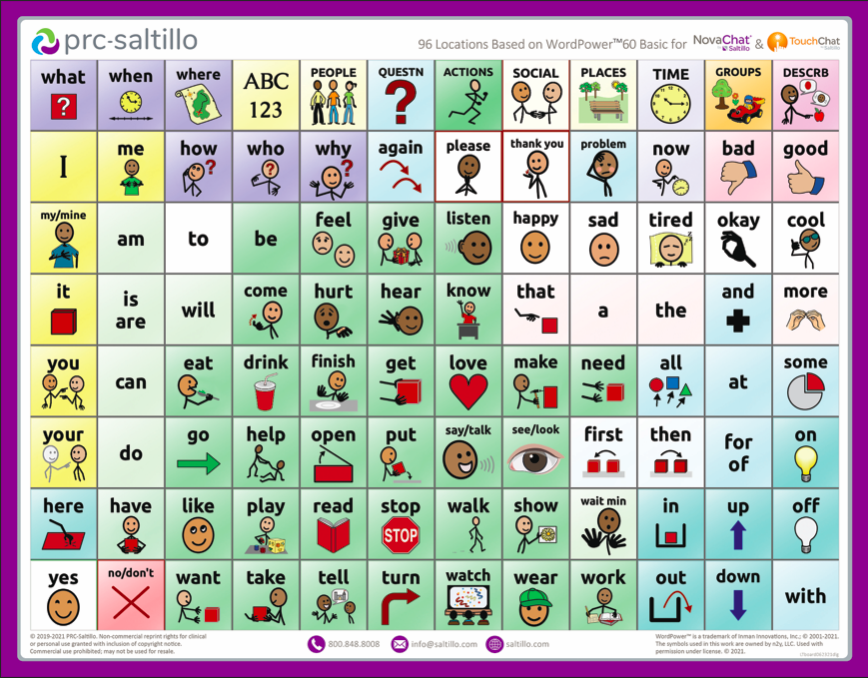
PRC Saltillo’s Core Vocabulary Board
⭐ What it is
A printed set of “core words” like go, want, help, stop, more, open, you, I, like — the words that can build hundreds of messages. This one from PRC Saltillo is a free resource, printable, and one of my favorites! There are Core boards in multiple languages on their site and even files to make flip books if you’re wanting more words and feeling crafty!!
💛 How to Use It (Modeling Ideas)
Model 1–2 words during daily routines (“GO bath,” “MORE swing,” “HELP open”).
Use aided language input: point to words as you talk.
Keep the board visible in the environment (fridge, table, toy shelf).
Pair with spoken language — not instead of spoken language.
🎵 If your communicator uses gestalts
Swap out core-based phrases for natural language models using JoyReal-style supports:
“Let’s go!”
“Help me out!”
“Do you like that?”
“We did it!”
Use the board to highlight key words without forcing grammar.
👍 Pros
Free or low-cost
Portable
Works across activities
Great for modeling the “heart” of language
👀 Cons
Limited vocabulary
Not ideal for specific requests (e.g., snack names, toy names)
👤 Best For
Beginners who don’t yet have a device
Parents wanting a simple place to start
Students who benefit from consistent routines
Having a backup for a high tech device
2. Picture Communication Cards
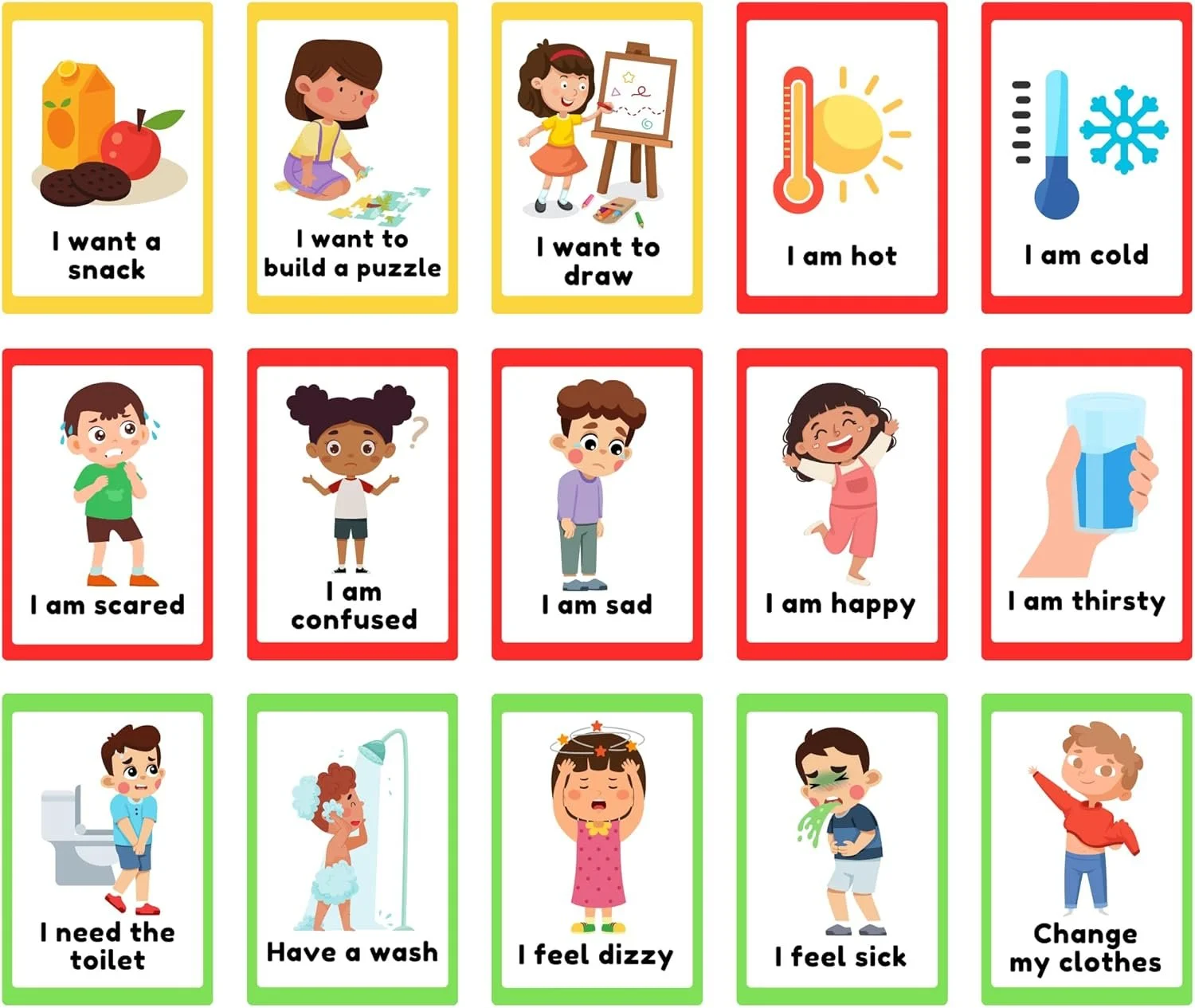
Laminated Picture Communication Cards
Get it here: https://amzn.to/48IJm1p
A small set of cards that can be used to communicate. There are many options for communication cards, but these are pre-printed and laminated, ready-to-use.
⭐ What it is
Picture cards to help supporting requesting objects or actions. Can be stored in a flipbook for organization
💛 How to Use It
Model language by pointing to the pictures as you talk about what you’re doing
Invite the child to do the same
You can use single words or 2–3 word models like “want swing,” “go outside,”
Or for gestalt learners:
“Let’s go outside!”
“Want the swing?”
“We’re doing snacks!”
Highlight opportunities for choice-making.
👍 Pros
Helps with specific vocabulary (favorite foods, toys, routines)
Super customizable
Portable and can be used and posted in a variety of places (by the fridge, by the bathroom, by the door, etc)
👀 Cons
Requires some prep
Limited Vocabulary Options
👤 Best For
Early communicators who love choices
Classrooms looking for durable, laminated AAC
3. Single-Button Voice Output Device (e.g., “Big Mack” style)
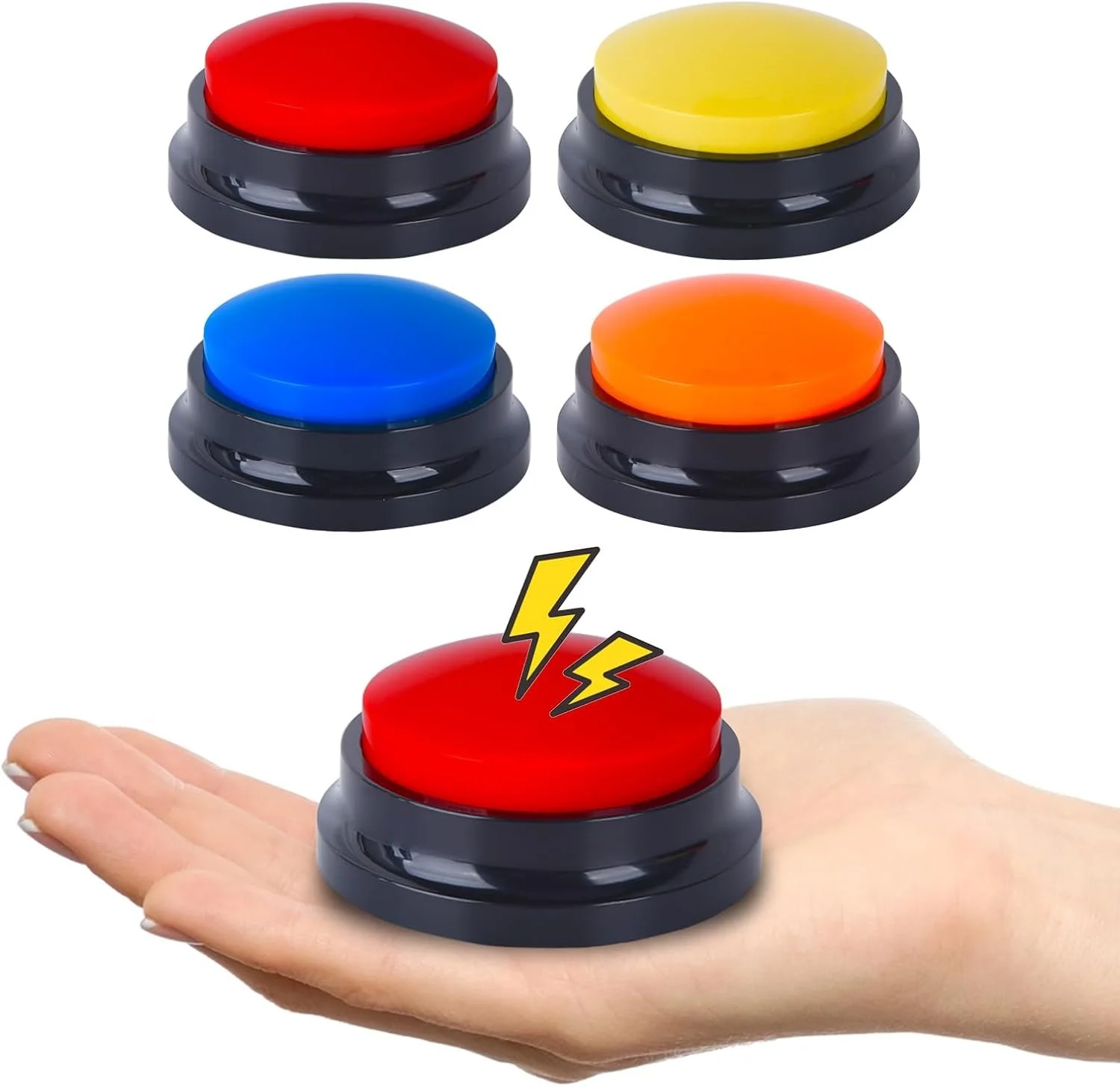
4 Pack AAC Buttons
A simple button that speaks a recorded message.
⭐ What it is
A device where you pre-record one phrase. Ideal for participation, routines, or repeated messages.
💛 How to Use It
Core modeling:
Record “GO!” and use during play with cars or swings.
Record “MORE” during snack or sensory time.
Gestalt-friendly modeling:
Record natural phrases:
“Let’s do it!”
“Want more?”
“Here we goooo!”
“All done!”
Let the child press it during predictable moments.
👍 Pros
Immediate, motivating
Great for early success
Encourages social participation
👀 Cons
Only one message at a time
Not expandable beyond what is programmed by communication partner
👤 Best For
Teaching cause-and-effect
Early communicators with limited motor abilities
Kids who thrive on routines and repetition
4. Mid-Tech Static Display Device
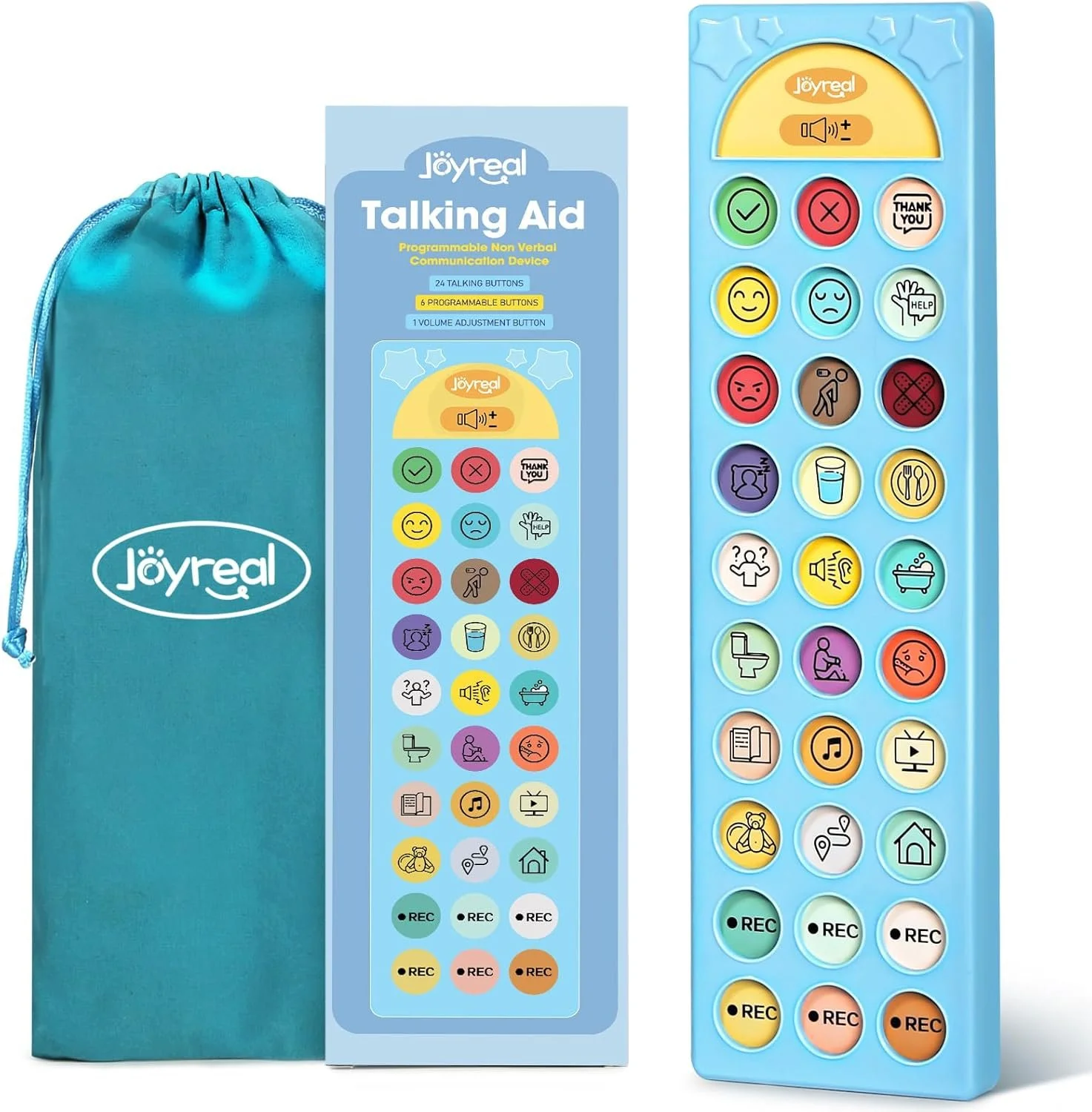
Joyreal Talking Aid
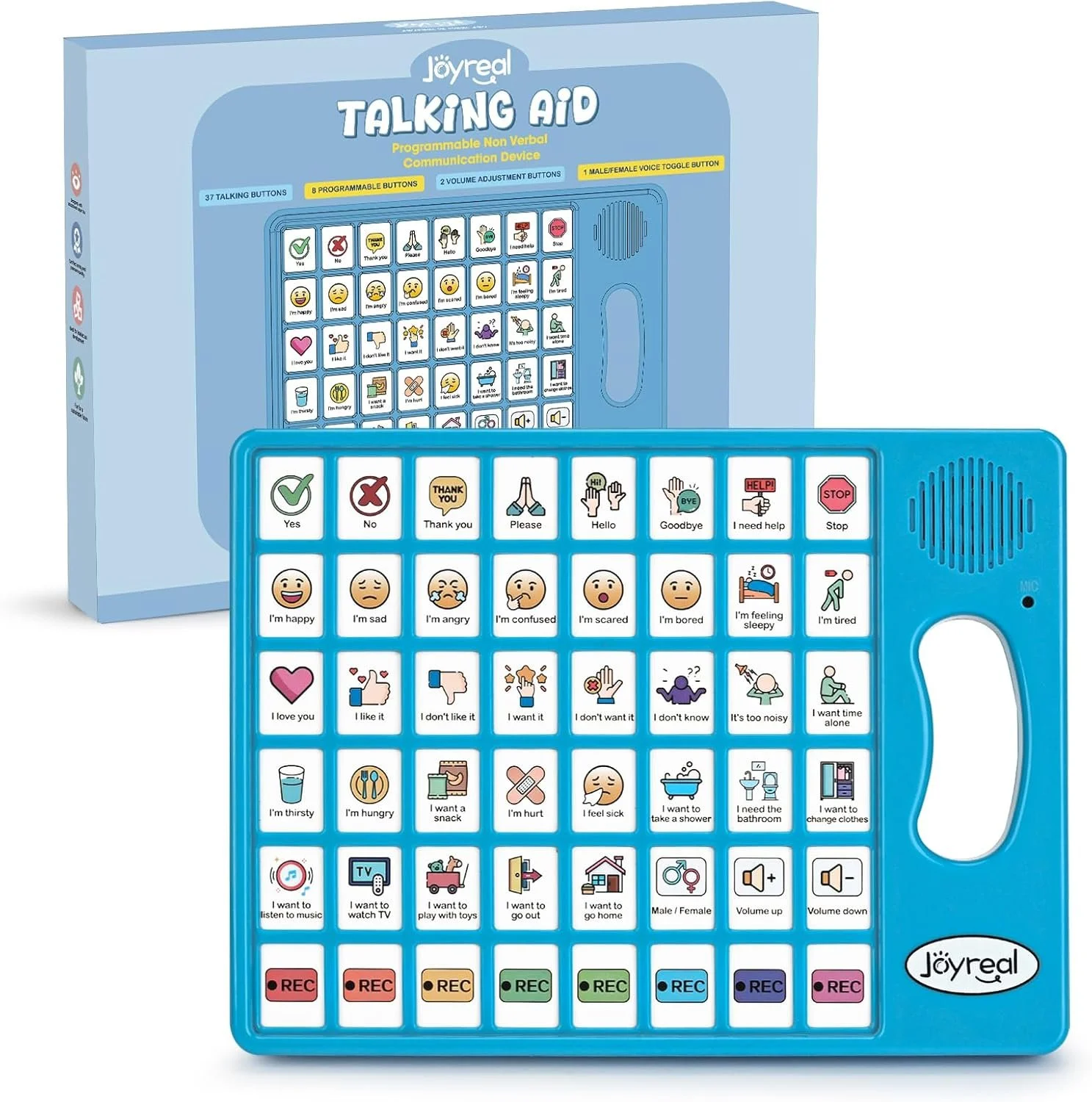
Joyreal Talking Aid
A multi-button board where each cell plays a pre-recorded message.
⭐ What it is
A device with multiple buttons, each with its own symbol and recorded message. Buttons can represent core words, phrases, routines, or social messages.
💛 How to Use It
Add core words to the main page: go, stop, like, want, help.
Add fringe vocabulary tailored to routines (snack, bathroom, toys).
Model during shared activities:
“GO!” (at the swing)
“HELP” (opening a snack)
“I LIKE IT” (favorite toy)
Gestalt-friendly ideas:
Program whole phrases: “Let’s go outside!” “I want more!” “All done now.”
Use natural, conversational tone in recordings.
👍 Pros
Multi-message
Highly customizable
Reliable (no glitches!)
👀 Cons
More setup time
Limited vocabulary size
Requires re-recording as skills grow
👤 Best For
Beginners needing more than one message
Students who benefit from structure
Families transitioning toward high-tech AAC
5. Visual Routine Board (Morning, Bedtime, Play, Snack)
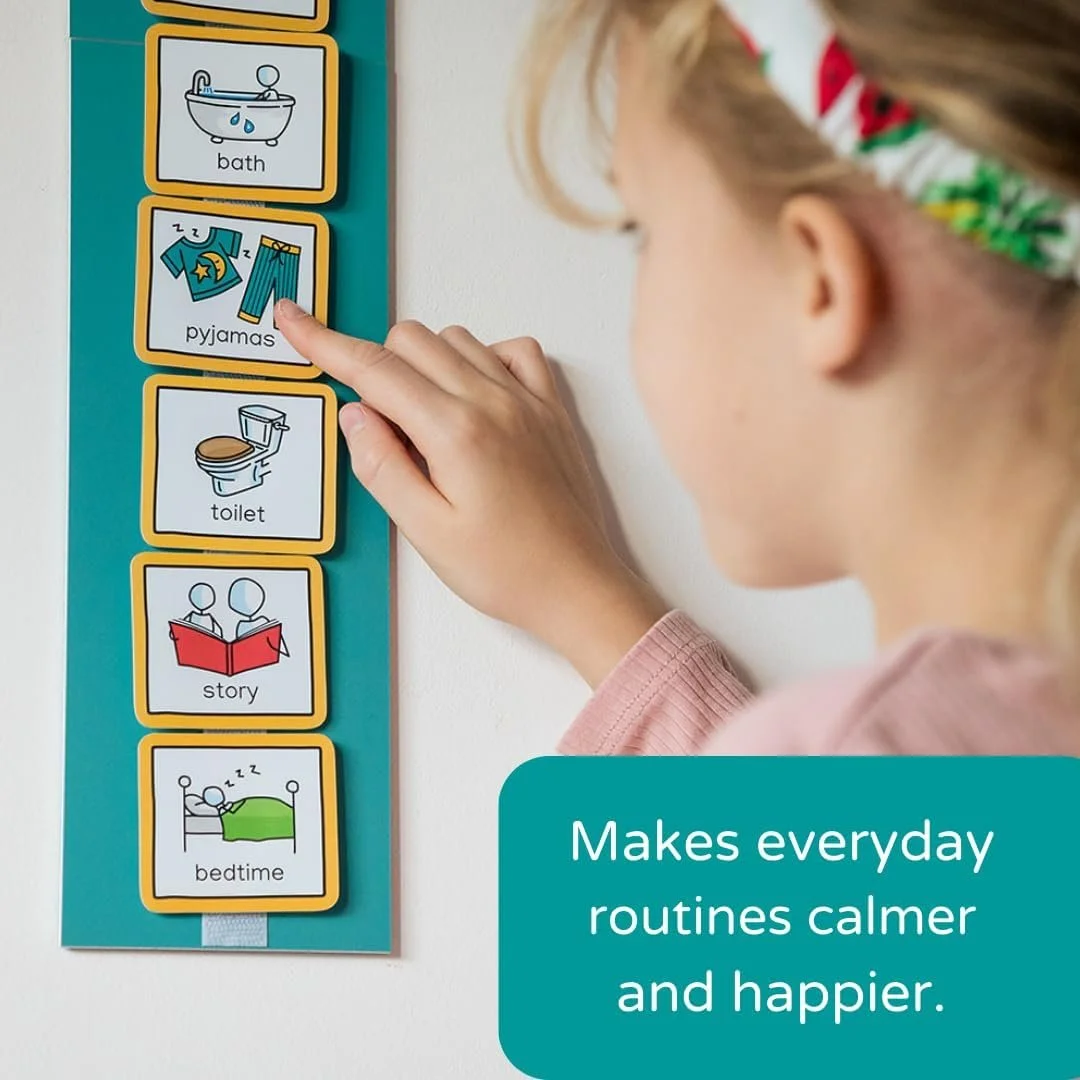
Visual Schedule Board
A simple visual sequence supporting predictability and participation.
⭐ What it is
A step-by-step visual chart showing what comes next — ideal for regulation, transitions, and communication opportunities.
💛 How to Use It
Review the routine together before starting.
Pause at each step to model a word (“GO,” “HELP,” “OPEN,” “DONE”).
For gestalt communicators, pair the visual with natural phrases:
“Let’s do the next one.”
“We’re all done!”
“Ready to go?”
Use visuals as shared reference, not compliance tools.
👍 Pros
Supports emotional regulation
Creates natural opportunities for communication
Easy to customize
The cards can also be used for communication cards for requesting and commenting
👀 Cons
Not strictly “AAC” (but AAC-adjacent and extremely helpful)
Requires consistency
👤 Best For
Kids who crave predictability
Families building communication into daily routines
Students who benefit from regulation support
✨ Final Thoughts: Start Simple, Stay Affirming
Your AAC Starter Pack doesn’t need to be fancy, expensive, or perfect.
It just needs to help your communicator express themselves, feel competent, and participate in their world with autonomy and joy.
With a few low-tech tools, intentional modeling, and neuro-affirming language, you’re already building a foundation that will support communication for years to come.
And remember:
You don’t have to master AAC to start AAC.
You just have to start. 💛
**This post contains affiliate links, which means I may earn a small commission at no extra cost to you. Thanks for supporting my work!
